حجّة هي قرية فلسطينيّة في شمال الضفّة الغربيّة، تقع على بعد 18 كلم شرق مدينة قلقيلية. وحجّة هي كلمة آراميّة تعني السوق. تحيط بالقرية خمس قرى وتشتهر بوجود جامع مملوكيّ قديم يعود تاريخه إلى 1323 م.
اشتهرت حجّة، تاريخيًّا، بإنتاج الأسرجة المستخدمة لركوب الجمال وغيرها من الحيوانات. اليوم، تقارب مساحة القرية نحو 13119 دونمًا من الأرض التي يستخدمها السكّان لزراعة الحبوب والزيتون والفواكه. يبيع المزارعون المحلّيّون إنتاجهم في سوق حجّة وفي أسواق القرى المجاورة، بما فيها سوق قلقيليّة. يبلغ تعداد سكّان حجّة نحو 3218 نسمة.
تشغل البلدة القديمة في حجّة النصف الشماليّ من القرية، ويعيش فيها 37 عائلة من ذوي الدخل المتوسّط إلى المتدنّي. يعمل معظم الـ 178 ساكنًا في زراعة الأرض أو في قطاع الإنشاء.
مع مرور الوقت، ترك مَن استطاع من السكّان البلدة القديمة وانتقل للسكن في بيوت اسمنتيّة في القسم الجنوبيّ من القرية، ما أدّى إلى هجر 139 مبنى تاريخيًّا من مباني البلدة القديمة (أيّ 64%). ما تزال العديد من مباني البلدة القديمة في حالة وظيفيّة جيّدة، غير أنّ أجزاءاً من هذه المباني أخذت بالتدهور بحيث لم تعد صالحة للاستعمال.
هدف رواق من وراء مشروع حجّة إلى إعادة الحياة إلى البلدة القديمة في القرية، معيدًا إيّاها إلى كامل قدرتها وتأهيلها. ابتداء في آذار/مارس 2011، أخذ رواق خطواته الأولى نحو تحقيق هذا الهدف من خلال إجراء المسوح والتوثيق والتحضير لمخطّط إعادة الإحياء. في ثلاث سنوات قصيرات، تمّ تنفيذ خطّة إعادة التأهيل، وقد تمّت حماية وترميم 65 مبنى وعدد من الفضاءات العامّة. أكمل رواق العمل في حجّة في كانون الثاني 2014.
لقد أرست زيارة رواق الأولى في سنة 2011 النهج الذي استمرّ عليه رواق في العمل في حجّة، وهو تسليط الضوء على أهميّة تحسين شروط الحياة العامّة للسكّان الحاليين وإعادة السكّان إلى البلدة القديمة وترميم بيوتها المهجورة. خلال الزيارة الأولى، لفتنا استثمار سكّان حجّة الفضاءات العامّة وأزقّة البلدة القديمة في حياتهم اليومية: جلست النسوة المسنّات أثناء تحضير الوجبات عند عتبات البيوت يحادثن الجيران وعابري الطريق؛ غيرهنّ نظّفن الشوارع والأزقّة أمام بيوتهن. كان الأطفال العائدون من المدرسة يتراكضون في الشوارع حاملين البوظة ورقائق البطاطا.
لم يهدف مشروع حجّة إلى خلق الفضاءات العامّة وإنّما ما تمّ هو إعادة اكتشاف هذه الفضاءات وإعادة تعريفها وفق الأماكن التي تعوّد الناس على التجمّع عندها، مثل ’زاروبة الهوا‘ وهو زقاق ضيّق مفتوح في أحد أطرافه على المساحة أمام المضافة. تاريخيًّا، كان الناس يتجمّعون في هذه الأروقة على فنجان من القهوة أو الشاي، جالسين على حجارة طويلة منخفضة الارتفاع. هذه الممارسات المجتمعيّة القائمة في البلدة القديمة كانت بدايةً لمشاريع تتمحور حول تدخلات في الفضاءات العامة التاريخية من خلال تأهيلها لتصبح آمنة وسهلة الوصول ولتوفير مناطق مظللة بمعرشيات الباسفلورا والكروم، وأماكن للجلوس واللعب.
انخرط رواق بعد ذلك مع أهالي البلدة القديمة في حجّة في مقاربة تشاركيّة في إعادة تأهيل المباني المهجورة، يساهم فيها الملاك والسكان بجزء من أعمال الترميم من خلال نظام العونة – وهي نظام من التكافل المجتمعيّ التفاعليّ المتأصل في الحياة الريفية في فلسطين . تميّزت هذه المقاربة بشكل خاصّ بفضل عدد كبير من الناس الذين ما زالوا يقطنون البلدة القديمة. لهذا الغرض، ول اليوم، بات واضحًا أنّ هذه المقاربة التعاونيّة قد رفعت إحساس السكّان بالفخر على المستويين المحلّيّ والوطنيّ.
تبنّى هذا المشروع نهج العمل المسمّى ’من الداخل إلى الخارج‘، وبالتالي تمّ العمل مع السكّان لتعزيز واستخدام مساكنهم، والعمل على تجميل السطوح الخارجيّة للمباني والأزقّة المحيطة. وقد شكّل الفضاء العام والزقايق (الأزقّة) العنصر الجاذب الأساسيّ لسكّان حجّة لإعادة النظر في علاقتهم مع المباني القديمة ولترميمها. وبسبب التمويل المحدود، كان الهدف في البلدة القديمة في حجّة هو خلق نموذج إعادة تأهيل متكامل من خلال تكثيف مواردنا في منطقة تتركّز فيها مجموعة من المباني والفضاءات العامّة بحيث يعاد تعريف ويعاد استخدام هذه المباني بأقصى أثر ممكن على المجتمع. وعليه فقد شملت منطقة المشروع في البلدة القديمة المضافة والمسجد القديم.
مع حلول 2013، كنّا قد أدركنا هدفنا بترميم نحو 12 وحدة باتت صالحة كمساكن، وثلاثة مباني كمراكز ثقافيّة واجتماعيّة، وشبكة من الفضاءات العامّة والحدائق الصغيرة المفتوحة لاستخدام الجمهور. من أجل تحسين بيئة المعيشة والظروف المعيشيّة بشكل عامّ، اشتمل المشروع أيضًا على أشغال في الطرقات والأزقّة، وعلى ربط المساكن الخاصّة بالبنية التحتيّة العامّة وشبكة الصرف الصحيّ.
2010
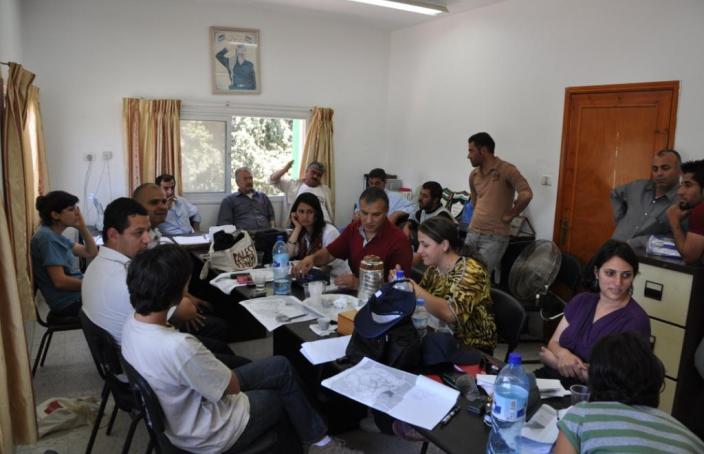
Before the Hajja project began, RIWAQ focused its efforts on surveying residents and economic/agricultural activities for mapping purposes. In 2010, RIWAQ began using its own resources to survey the historic center and update the Register of Historic Buildings (2006) through the identification and documentation of historic buildings, interviewing local residents and businesses, and surveying all stakeholders.
June 2011
The physical implementation started in summer 2011 with the rehabilitation of a complex of buildings and a courtyard for the local Red Crescent organization al Hilal activity center. The complex hosts activities for youth and has a gymnasium hall for women. This project set a rehabilitation model for years to come as the restoration of the village continues at the hand of local residents and Village Council members. In addition, the project continues to garner interest in the restoration process among visitors who see potential in conserving their homes.
July 2011 – September 2011
Al Madafah is an important landmark for Hajja. It is the village’s first guesthouse and first school. A community volunteer program was organized to clean up the plaza of al Madafah to prepare it for future activities as well as introduce the historical significance of al Madafah to residents. Later on, a meeting was convened with village elders regarding an oral history project associated with al Madafah and its important role in shaping the social and cultural history of Hajja.
The conservation of al Madafah Public Plaza created the first shared space/garden that a local institution actively utilized while opening it to the community for local activities and celebrations.
July 2011, September 2012, October 2013
In July 2011, in cooperation with Hajja’s Village Council and Red Crescent Society, Hajja hosted its first annual Bamyeh (Okra) Festival. Foreign tourists and visitors from across the region were in attendance. Hajja’s residents exhibited cultural crafts and traditions, and invited visitors to tour their restored spaces. An elder resident who is an expert in clay-making, presented mud oven models she made others made zaa’tar (thyme spice mix) and olive oil, and provided demonstrations on how to dry emptied pumpkins for planting. Young people took pause in front of old buildings and ornamented doors and posted them to Facebook with quotes such as “Hajja, my old village.”
The second annual Bamyeh Festival focused on introducing and exploring Hajja’s architectural restoration projects. The festival concluded with a number of performances in al Madafah Plaza and the newly constructed children’s playground.
The third Bamyeh Festival took place in October 2013 and was led by Hajja’s Village Council in conjunction with several local organizations.
Dec. 2011 – May 2012
To reach out to residents, RIWAQ distributed application forms across the historic center to those interested in restoring their historic buildings as dwellings and shops. The first phase of the rehabilitation of the historic center included preliminary cleaning, pointing, and screeds and roof insulations in an area that included twenty-seven buildings. In addition, this phase included the renovation of the interior of al Madafah which was to be utilized by al Nawras Cultural Forum. It also included the renovation of a home in which labor was donated to the project by the homeowner.
December 2011
In cooperation with the Palestinian artist Jawad Ibrahim, a workshop was held to explore the different types of stones in the area and the possibility of using stones for sculpting. The workshop also presented an opportunity to display the ancient inscriptions found in the village. Ten students from An-Najah National University in addition to local residents attended the workshop and many sculptures were produced in the shapes of the Old Mosque’s palm tree and minaret.
Feb. 2012 – Sep. 2012
This phase of this project included the exterior renovation of eleven buildings, and interior renovation of three buildings this was made possible, in part, through the contribution of building owners.
In addition, a public plaza was created, along with infrastructure for a children’s garden and extended infrastructure to mitigate wastewater.
In a later stage of the project, playground equipment was installed in cooperation with Middle East Children’s Alliance (MECA). This project improved the neighborhood, not just aesthetically, but provided a safe and constructive place for children and families to play and socially interact.
Aug. 2012 – Nov. 2012
In the third phase of rehabilitation, the project focused on the exterior renovation of sixteen buildings in addition to the rehabilitation of Hajja’s Old Mosque.
February 2013
Through coordination with the Palestine Writing Workshop, fifty children attended this event, which included several activities ranging from storytelling by Maya Abu Hayat and story writing by the children of Hajja about its historic center.
November 2012
In partnership with al Ma’mal Foundation, the “Gestures in Time” exhibition came to life in several historic centers, including Hajja. Many artists took part in the exhibition, which toured historic centers across the region and in which villages became the artists’ canvas to create site-specific art directly related to the environment, culture, history and urban fabric of Palestine. An installation by Jumana Abbud of wind chimes was placed in Hajja, where specific artist’s work was affected by the wind resonance in the village due its high position on top of a hill.
March 2013
This activity was planned for ninth graders from the village’s girls’ school, where the students prepared a questionnaire and toured the historic center to document the house gardens and explore local produce. This activity focused on environmental initiatives and emphasized the role of house gardens as beautification elements with the power to enrich public and private spaces across the village.
Sep. 2013 – Nov. 2013
This project centered on the rehabilitation of the historic center’s public spaces for the greater good of community members across Hajja. Works included pointing, plastering, tiling, base course works, and carpentry works.
Sep. 2013 – Dec. 2013
Through the help of private donations, RIWAQ was able to renovate a private home of an economically disadvantaged family in Hajja. Renovation work included cleaning and excavation, pointing, plastering, tiling, mechanical and electrical work, and the installation of doors and windows.
